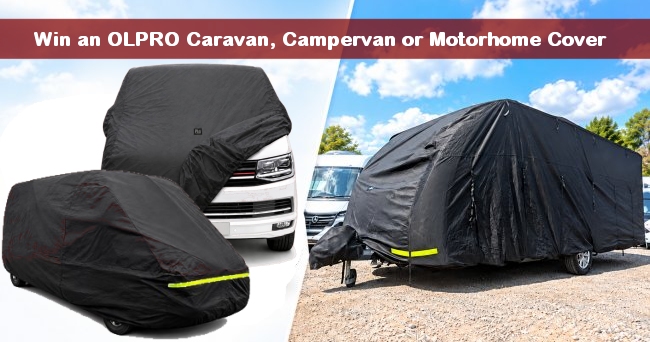
Last used folding camper late september last year. last month unfolded it and found water in the rear fold area which has affected some of the woodern cupboards in our pennie pullman. The trailier and transit cover are in good sound condition and i also put a breathable cover over the whole unit. Has anyone else had similiar problems or any ANSWERS please.
What a shame you didn't open it up for an airing occasionally and you would have noticed the problem before so much damage was done.
On my Combi Camp the water pools on the cover and I have noticed that it seeps through if left, even though the cover appears to be sound. I suppose it is the sheer weight of the water which forces a way though.
------------- Caz
If you can't see the light at the end of the tunnel, just keep going till you go round the bend.
We put dehumidifying crystals inside our Conway unit before packing it away for the winter. Then check and empty a couple of times during the winter. We have had no problems so far - touch wood.
You can get the crystals and holding tray from Woolworths, Robert Dyas or Towsure.
Daft question , did you empty it out completly of cushions mattreses and everthing else that was'nt "bolted down" apart from the hob & sink? We had similar problem one year when through family crisis we did'nt winterise our sterling and found water from condensation cos the air could'nt get round inside.
Tip : when winterising it drop the hitch down as far as poss without grounding it so camper body's on a steep angle. This way the water runs off it instead of pooling on or between the storage cover and the vinyl transit cover. Also consider some bubble wrap (you can get it from garden centers off the roll) to go between the transit cover and the wooden bed leaves. Put the bubbles to the wood so the air can get between the wood and the transit cover. It also helps against pinholes in the transit cover. Dehumidifying crystals are great too but dont forget if they are in a tray you'll need ot be able to get in to empty off the water they collect - if you've anyone in industry or packaginh industry scrounge some of the bigger bags of silica gel that they use to keep their products free from condensation when shipping abroad or getting stuff in from abroad.
Good luck in drying out.
------------- Aye the force is strong in ye but thoo's not yet a Geordie.
This won't answer your current question but this winter put a row of upturned flower pots between the transit cover and the outer sheet to form a ridge tent effect. Water will then run off and not sit on the cover for several days and possibly soak thru. I use a wood frame to hold my cover 12" over the transit cover. This way the transit cover stays dry but if water doe's get thru it soon dries in the airflow above it. For summer storage between trips I tip the trailer nose down as suggested above.
I use aforemetioned dehumidifier crystals even in a dandy and usually get about 2 half full of water per winter due I presume to condensation. Never any detactable 'damp' aaand I leave not only cushions , curtains etc but also sleeping bags in all winter, even if the dandy has been packed away 'wet' . When I had a canvaas railer tent many years ago ( an everyman rapide which was very good indeed) I always removed the complete canvas & curtains & cushions and stored them in the loft overwinter. Trouble is canvas only needs a bit of long term lurking damp for mildew to set in whereas with the non canvas dandy damp on the fabric is not a problem
Hi All sorry for the delayed response been away in the Lakes with the camper. You have given me good advice which i will carry out this winter, thanks again.
As I stated above I was told that if I use a winter cover over the transit cover there must be room for the trailer to breathe, ie keep the winter cover above the transit cover to create an airspace of at least 6" or more. I have done this for the past 4 years and so far not had a problem. I fit a wooden frame over the length of the trailer so the winter cover only touches the transit cover down the length on the two sides. I remove this in march as the weather starts to warm so I hopefully don't get any condensation problems. I am lucky as the top of my trailer only gets the sun until about 10am then it's in the shade. I can't think why we should not put the nose down during the summer as this allows most of the water to run off the transit cover. Anyone got any ideas why?
We were told to put the trailer nose up as the pathfinder transit cover is sealed at the front so any condense on the under side of the cover can't run out.
------------- Good friends are hard to find, difficult to leave and impossible to forget.
Our Sterling's "sealed" in the same way as the Pathfinder at the front although the design is'nt a true seal because its open at each side. We too were told "put the nose up" but could'nt get it high enough to make the water run off completely. So we store nose down and have never had condense water gather between the transit cover and the nose.
Sam, On the question about American campers, all teh american folding campers ive seen all have hard tops on telescopic legs that collapse down form a sealed hard shell over the camper body so i would'nt think it necessary to store at an angle as teh rain runs off it like it does a caravan. Also thinking about the recommendation that americans don't use storage covers, could it be something to do with the bugs they get in the states? I'd not like to be removing my storeage cover at the end of long winter happlily thinking of the season ahead and suddenly coming face to face with a spider the size of my hand or a snake, or worse: finding holes where something's eaten its way in after sheltering from the weather under the storage cover and is awaiting my first nights camping before introducing itself.
A day of all things motorhome and campervan. The show is held both in the main indoor arena and across the grounds. Catering, hot drinks and food options are available. Easy access to the site and free parking included. Win one of five pairs of day tickets


 Topic: water inside folding camper after winter