I'm 85 and accept that my driving days are numbered so I intend to put the camper on the market although that might upset my wife a trifle as she likes to lay in it on sunny afternoons looking at the sky. When the camper goes on the market I want it to be in fine fettle so I asked a garage for a check over and quote. They came back with a cost of £1,600 which I asked my mechanic son to check out at the garage he works at coming back at less than half the original quote. I've lost confidence in commercial garages and I'm past laying on my back on gravel so I asked my very competent grandson to carry out the tasks above.
I will supervise him having carried out many oil/filter changes and I have also changed many anti freezes. However, although I have topped up Brake Fluid when working on elderly cars I have never done a total Brake Fluid change so would welcome any advice on that. Before anyone comments on my having a mechanic sone forget it. His primary objective appears to be chasing young ladies and I'm unable to compete with that.
Are the brakes spongy ? Brake fluid only needs changing every 2 years if you are caning the brakes. If the van has had little use & brakes feel ok I wouldn’t bother.
I'll let you be the judge on whether or not brake fluid needs changing.
As a task, it's easy in principle, but a bit of a time consuming faff in practice and does require someone to grub around under the vehicle, AND another person to pump the brake pedal. There is a one person and easier/quicker way at a modest investment in a gadget that I'll get to later.
Inevitably it needs access to the rear of the brake drum/caliper on each wheel to undo the bleed nipple, now whether someone skinny and nimble enough can do that without jacking (AND axle stand) each corner and/or removing each wheel depends on the accessibility on the vehicle!
The procedure is to start with the furthest brake from the reservoir, undo the nipple (with a hose attached to drain fluid into a container), pump brake pedal to floor and HOLD there, tighten nipple (to stop air being drawn back into system) then release pedal, that is repeated until clean fresh fluid is expelled from bleed nipple. All the time, the fluid level in the reservoir needs monitoring and topping up as necessary. This all needs good communication between the two people to get the procedure/timing right.
The procedure is repeated with the other brakes working from furthest away to nearest to the reservoir in turn.
Told you it was a faff! Be prepare for nipples that wont budge OR if forced either round off the nut hexagon, or snap off in cylinder/caliper! Been there, done it! Brake fluid is hydroscopic and absorbs moisture from the atmosphere which in turn seems to make brake nipples particularly prone to corroding in place!
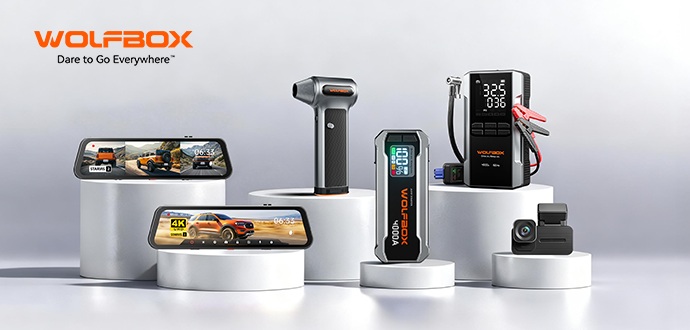
There is a gadget on the market for around £25 that makes it a one person job, and a lot quicker too. It's a pressurised bottle of fluid that attaches to reservoir, and both purges the system (removing need to pump pedal) and constantly refill reservoir manually. After attaching gadget and pressurising, it's only necessary to systematically open each bleed nipple, the pressure will force clean fluid through the system, when clean fluid appears at nipple, just tighten up for good and move on to next wheel.
Brake fluid is corrosive to paintwork, AND dangerous to the environment (so not down the drains!), so needs correct disposal in an approved manner, your local council recycling centre should take it.
Personally, if not given problems with spongy brakes, I'd move the vehicle on as is.
Many thanks for the information especially the presurised bit of kit. I've had the vehicle for about 7 years and never thought about changing the fluid and any mechanic I mention it to PO Pos the idea.
As Billy says brake fluid should be changed every couple of years. I understand the fluid is hydroscopic and this is one of the reasons for changing it.
Quote: Originally posted by Balliol on 26/5/2022
I understand the reasons for changing brake fluid but I have never met anyobe who has done so.
A proper service done to the manufacturers spec should involve a routine change of brake fluid at the recommended mileage/period! Corner cutting by cowboys is far from unknown though. You can get away with it for a while, but it'll catch up with you eventually one way or another.
There is a VERY good reason for doing so, the brake fluid itself has a boiling point of 155C (for DOT 4 grade), whilst the atmospheric water absorbed over time boils at only 100C, if you brake on a long downhill or from high speed, or indeed very hard in an emergency, the heat generated in the brakes can cause the water in the fluid to boil off, turning to steam which is compressible, which in turns means you loose braking power at the very time you need it at it's most efficient! Hot brakes from hard use tend to fade anyway, you really do not want to be compromising them further with a very spongy pedal! It really is the difference between only just stopping in time and crashing! In normal everyday driving with gentle braking you'd never be aware of the time bomb under your foot!
There is of course the other reason to minimise water in the brake system, and that is keeping corrosion of metal parts under control, that can ruin seals and shorten life of the system, or in time lead to brake failure to some degree from the damaged seals.
Quote: Originally posted by Balliol on 26/5/2022
Many thanks for the information especially the presurised bit of kit. I've had the vehicle for about 7 years and never thought about changing the fluid and any mechanic I mention it to PO Pos the idea.
I agree with your mechanic (I've been in the trade for near 50 years).
To save any doubt, get a brake fluid moisture tester (cost under a tenner). If the reading is under 3%, the fluid is fine.
Saves you a lot of time, hassle and money.
And sell the tester afterwards!
------------- I came into this world with nothing and I've still got most of it left.
If anyone buys a used campervan privately they would be sensible to get it serviced so they know it is ok. Imo provided it drives ok & brakes feel ok then I would sell it as is. If you have never changed brake fluid before I really would not bother. Why risk getting in a mess with it & end up paying somebody to sort it out if the brakes are working ok ?
I have just received a quote for Oil and filter change, Brake Fluid change and Anti Freeze change of Parts £177.60 and £123 labour which I suspect is reasonably fair. However, my eldest grandson who is quite reliable has insisted doing the job for me using the pressure device shown above. I will let you know how we get on.
A day of all things motorhome and campervan. The show is held both in the main indoor arena and across the grounds. Catering, hot drinks and food options are available. Easy access to the site and free parking included. Win one of five pairs of day tickets


 Topic: Servicing questions. Brake fluid change?


 via mobile 26/5/2022 at 9:23am