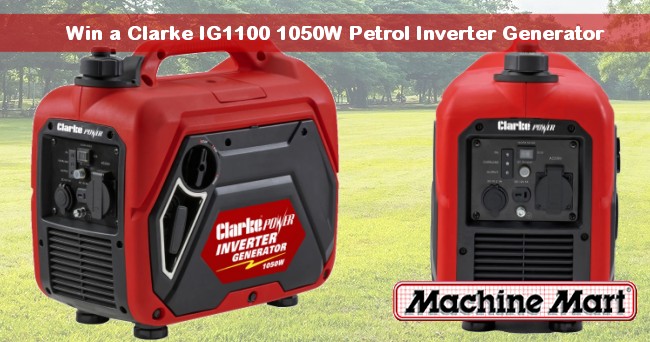
That is quite ironic. I would happily switch to a BEV if all of the UK's electricity was from renewable sources and the BEV matched the capabilities of my Land Rover; that is a range of 400+ miles with 10 mins charging, 4000kg towing limit and a 1000kg payload capacity; as well as excellent off-road ability. As it is unlikely either of those things is going to happen in the foreseeable future I very much doubt I will ever have one. Though that pic has given me a new business idea, I could easily fit quite bigger generator than that one in the back of my Landy.
electric cars will be the end of us caravanning, as their is nothing that can pull the weights we need and get further than 100 miles in one day, making the likes of the south coast/devon/cornwall a 5 day journey leaving us with 5 days down their to start the return so making it no worth the bother
With a powerful, commodious, clean (Road Tax £20pa), economic (60mpg, 42mpg towing),reliable, diesel car; there is little or no practical reason to buy an extremely expensive, less efficient electric car.
It will see us out until diesel fuel is no longer available and we are too old to drive.
Perhaps by then hydrogen will be readily available
With the recent announcement on TV news that energy suppliers are going to increase their prices to extortionate figures then obviously people with electric cars are now going to pay more so not as economical as they try to make us believe. We can try to cut back on domestic bills where possible but when a person with an electric vehicle needs to travel to work every day they are not going to be able to cut back anywhere so as the energy companies continue to increase their prices, the price of electricity will escalate dramatically to the consumer.
I suspect battery powered vehicles will be a stop gap before sustainably produced hydrogen starts to be available. Unless there is a magnitude change in battery technology they are never going to be energy dense enough to power larger vehicles in any useful way.
Camcroft - that pic made me smile ironically as well, but actually it's not quite as stupid as it looks. Cars / drivers run out of fuel on the roads every day, which will often necessitate a man in a van bringing a can of petrol or diesel out. This isn't much different.
Marg -
Quote: Originally posted by marg6 on 20/8/2021
electric cars will be the end of us caravanning, as their is nothing that can pull the weights we need and get further than 100 miles in one day, making the likes of the south coast/devon/cornwall a 5 day journey leaving us with 5 days down their to start the return so making it no worth the bother
Even I think that's pessimistic. There will always be a need for vehicles that can tow heavy trailers, sometimes for 100s of miles (think agricultural and construction industries). I agree that capability isn't there yet but it will come within the next decade, or else the government will have to make some sort of U turn.
------------- "Don't wait for the perfect moment. Take the moment and make it perfect."
I fully intend to make my diesel X Trail last as long as I possibly can. It will probably be the last vehicle I ever own, as I can't afford to replace it, and certainly not with an electric vehicle. I could easily use an electric vehicle for most of my day to day driving, but only if somebody gave me one. Not very likely, and I'd still need my X Trail to pull the caravan.
Personally I don't see BEVs as the future at all. Not enough electricity is generated anyway to power the number of them needed to replace all the fossil-fuelled cars we have today.
The only possible way I can see them being viable is if we move from seeing cars as personal possessions to something we hire when needed, as with the Club Cars system now operating in some cities. That could work, as it would dramatically reduce the number of cars needed, but I can't see it being popular either with car manufacturers or with people who like the idea of having their own car, which is probably most of us.
There is a logic to it though because most privately owned cars spend 95% of their lives parked somewhere, and that in itself creates traffic congestion.
Quote: Originally posted by SamandRose on 20/8/2021
There will always be a need for vehicles that can tow heavy trailers, sometimes for 100s of miles (think agricultural and construction industries). I agree that capability isn't there yet but it will come within the next decade, or else the government will have to make some sort of U turn.
I don't think we will ever get to the point where enough energy can be stored in a battery to equal a diesel vehicle. Battery technology has come on at quite a pace it's true, but not that far really. Maybe it simply isn't possible? We are still a million miles from a battery that can be recharged in 3 minutes and propel a car for 400+ miles before needing to be recharged. I have heard people say that the battery is the equivalent of the engine in a fossil-fuel car, but it isn't. It is merely the fuel tank, and the fuel tank in a 20 year old car can still hold enough fuel to do a very similar mileage to when the car was new. The same cannot be said for a battery. A 20 year old BEV would probably have had its battery replaced at least twice in that time, and they would probably be in need of replacing again, at a cost far above the cost of a complete fossil-fuelled car.
Hydrogen, doesn’t make sense for small cars and vans. You fill it up with hydrogen, then you put it through a fuel cell to create electricity which then drives an electric motor and / or charges a battery
BEV plug in and charge the battery. Drive the motor it cuts out the fuel cell which is the middle man so adds to the overall inefficiency. Add to this most hydrogen today is produced in a very energy intensive way and CO2 releasing way.
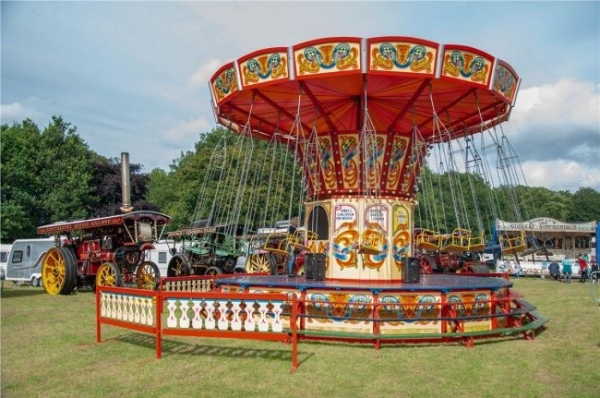
Amazing family weekend with old steam engines, classic car displays, market stalls, and full catering and bar. And camping on site - Save £25 by booking in advance.


 Topic: Are electric cars the future





 via mobile 20/8/2021 at 9:47am




 Not very likely, and I'd still need my X Trail to pull the caravan.