Sorry me again with yet more questions, I have read something about greasy towballs and that not all towballs will fit the alko hitch? Can anyone tell me what, if anything we need to do? We tow a normal trailer also.
You will need an "Alko" tow ball and need to keep it grease and dirt free, you can still tow your trailer with it but will then need to clean the grease off before hitching your van up. I use brake cleaner to clean the ball and hitch, hope this helps.
if you have an alko hitch you have to ensure that the towbar has no grease on it or it will damage the friction pads, I think other people have recommended using brake fluid to clean it before use and then regrease when using the trailer
------------- -x- Diane -x-
May 13 - Cala Gogo, St Cyprien (didn't go, hubby too ill to travel)
May 14 Ranc Davaine
August 14 Les Sablons
August 13 - Camping Playa Brava, Pals
The normal trailer will fit on an Alko ball, but you need an Alko ball for the Alko hitch (unless you have a swan-neck tow-bar - the Alko hitch needs more space in front and below it than a normal hitch, so an Alko ball has a longer neck).
When you tow the normal trailer you will need to grease the ball (or make sure there is grease in the hitch), but you need to make sure you remove EVERY trace of grease before towing the caravan or the stabiliser won't work (and if you get grease on the friction pads of the Alko hitch, you will need to replace them)- use a degreaser, not just a cloth, to make sure the ball is properly clean.
Putting it simply you are correct in that there are 'mainly' two types of tow bar hitches, the normal Alko hitch towball (the one that does not have the inbuilt stabiliser attached) needs to be greased.This tow ball is a standard unit.
However the modern Alko hitch (the one that has a red handle stabiliser attached, ) must not have the tow ball greased as it can effect the stabilisers grip.Also with this Alko hitch you need an Alko tow ball which 'looks the same' but is not, the distance from the centre line of the ball to the back (the part that bolts to your car) is longer to stop the slightly larger Alko stabiliser hitch from jamming up.
If you have an Alko hitch then you need a Class A50-X towball with a 'D' and 'S' Value greater than or equal to that of the towbar. A Class A50-X towball is an 'Alko-type' tow ball, but does not necessarily need to be manufactured by Alko. As far as I'm aware Alko only produce one type of Class A50-X towball. This has a rating of D = 17KN and S = 150kg. For most cars this should be sufficient but you would need to check the rating of your tow bar, which is normally on a little sticker on the side of the tow bar.
If you have a Discovery, or maybe other large cars, the towball rating may be higher. The Witter tow bar for my Discovery is D = 15.8KN, S = 250kg, so the S rating of the Alko manufactured tow ball is insufficient (being a lower rate than the tow bar). In this, and similar cases, one would need to have a non Alko Class A50-X. These Alko-type tow balls are available at most tow bar fitters or online from companies such as this here.
The S value of a tow ball/bar refers basically to the noseweight. Your caravan may only have a maximum noseweight of 100kg or less, but as far as I can work out, if your tow bar has a higher rating then your tow ball must be at least the same as the tow bar.
There should be no problem in using a non-Alko hitch on an Alko-type towball (i.e. your normal trailer), but an Alko hitch must not be used on a standard 50mm towball. Unfortunately you will need to grease the tow ball when using the trailer and completely remove the grease when towing the caravan with the alko hitch.
P.S. My recent converstions with Alko have now prompted the company to suggest that, in future, customers refer to the original towbar manufacturers suggested ratings.
No, I would say it was not OK to use the Alko manufactured tow ball.
For that tow bar you need an Alko-type, but the actual one produced by Alko themselves does not have a high enough rating. The Alko produced tow ball is D = 17KN and S = 150kg. Your S rate is higher (i.e. 210kg), so the towball should have a rating of at least D = 17KN and S = 210kg. (The rule is that the tow ball should be equal to or greater than the rating of the tow bar).
If it's any consolation, the ones not made by Alko are cheaper - I think you must pay for the brand name. I paid about £14 for mine from our local tow bar fitter who put the new tow ball on for me F.O.C. You would need to go for something like the TB41 from here (the second one down). This gives you a D value = 17.2kN, S value = 350kg. That is higher than your tow bar, but as I said in the bracketed sentance in my last paragraph, it's O.K. If you go into a tow bar fitter ask for a Class A50-X tow ball (to take an Alko hitch) with a minimum D value of 17kN and a minimum S value of 210kg. They will probably end up by selling you a A50-X D value = 17.2kN, S value = 350kg, like mine - that's fine. (Unless, of course you get a blank look!!!)
The whole thing is a bit of a pain, especially as the noseweight of your caravan is going to be nowhere near the 210kg your tow bar can take. The thing is, if ever there was a problem and it came to an insurance claim, I suppose it could be a possible get out clause for them paying out if it were not correct. I suspect there are many larger cars driving around with a tow ball which is rated lower than the tow bar, simply because folk are not that aware of the compatibility issue. I'm not going to risk it, so I've changed mine.
When I wrote to Alko questioning the values of the tow ball they produce, I got the following reply:
"Thanks for the information it certainly makes for interesting reading, especially since we ourselves run and landrover defender with a standard AL-KO tow ball. I will be very interested to hear what the engineers have to say about this one."
After following up the information I sent them, I had the following reply:
"It looks like the information you received was in fact correct but finding it written down is proving difficult, as a company we tend to err on the side of caution. So will be suggesting customers refer to the original towbar manufacturers suggested ratings in future."
Quote: Originally posted by ian-albion on 02/11/2010 NO NO, I did say cleaner not fluid
Calm down calm down, we know you did, it was a previous poster(dianebb72)who mentioned it.
------------- XVI yes?
As well is two words!
How does a sage know everything about everything? or does he? or does he just think he does?
Remember, if you buy something you bought it, not brought it.
Quote: Originally posted by Lostdreamer on 03/11/2010
So, the 'S value' is the noseweight that the towball is rated for, yes?
Basically, Yes. It's really the downward force that the tow ball or tow bar can take. (The lady I have communicated with from the Department for Transport, Transport Technology and Standards Division describes it like this: "The S value is the vertical mass, in kilograms, imposed on the coupling, under static conditions, by the centre axle trailer, when loaded to the technically permissible maximum mass."
But the tow ball 'S' value has to be the same or greater than the tow ball. You can be towing a small trailer with a noseweight of 25kg, but if the tow bar is rated for 250kg then your tow ball must at least match this.
I wasn't aware that towballs were available in differing noseweights. Heck, I only recently found out that 50mm balls arn't all rated to 3.5t!
A look around the first few tow ball on sale here will confirm this.
What does the 'D value' represent?
The way I understand it, is that it's to do with the weight the tow bar is capable of pulling. i.e. to do with the MTPLM of the caravan. Again, I will quote the Department of Transport lady:
"The D or Dc value is the theoretical reference value for the horizontal forces in the towing vehicle and the trailer and is used as the basis for horizontal loads in the dynamic tests."
I think the only other question I have is: Does this only apply to type approved hitches, or all of them?
I have to admit, I don't know the answer. As my tow bar is type approved then that's all I've looked at.
Now you probably wish I'd never have posted this, but if you want to know more technical details look here. I would really need a lot of time to understand this document fully as I'm not a mathemetician/physics expert etc and there is a lot of technical language here that would need sorting..... but be my guest..
Thank you kindly for your knowledge.
It's my pleasure - although I've probably caused people a lot of fuss by asking the questions. My problem is, that when I get hold of something, I'm a bit like a dog with a bone.
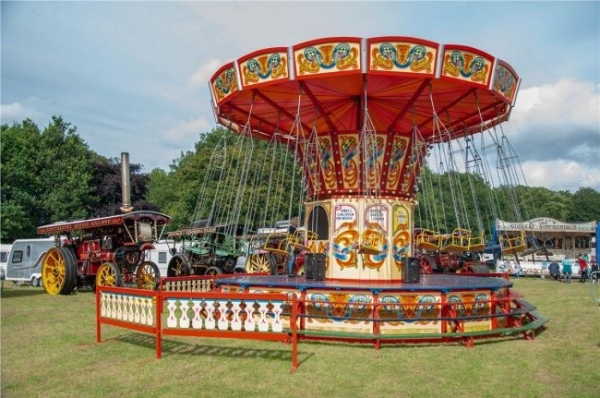
Amazing family weekend with old steam engines, classic car displays, market stalls, and full catering and bar. And camping on site - Save £25 by booking in advance.


 Topic: Towball?


 NO NO, I did say cleaner not fluid


 Calm down calm down, we know you did, it was a previous poster(dianebb72)who mentioned it.