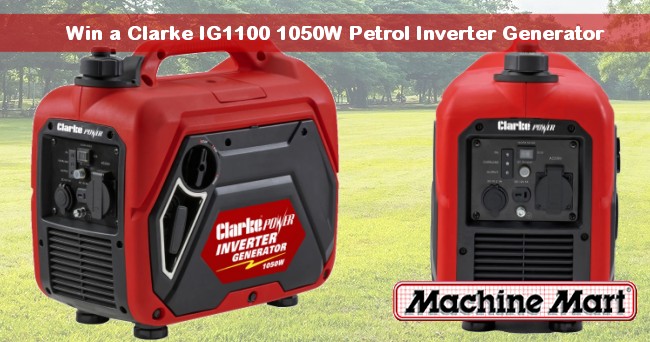
One option with a quality generator is to split the cost between yourself and a friend. You can run two caravans from one generator no problem. I personally avoid running a generator, but they are not uncommon on a rally field. I think it would be a bit frowned upon on a CL or CS though.
For what you save on the EHU, the running costs of a generator usually cost more than an EHU would have cost.
Basically, you have three things to consider.
1. Take as much power with you as possible. I.E make sure your battery is fully charged before leaving, not 80% charged which is what the caravan charger puts in. If possible, take a spare fully charged battery as a back up. Also, if you change your battery, go for the biggest available. Usually you have the option of a relatively cheap 85 A/H or the more expensive 110 A/H.The 85 A/H will supply 85 amps for an hour or 1 amp for 85 hours. Likewise the 110 A/H battery will supply 110 amps for 1 hour or 1 amp for 110 hours. In reality, you will be drawing little more than 1 amp most of the time but a motor mover could peak at 60 amps.
2. Use as little power as possible. I.E be as efficient as you can. There are the simple things like only having one light on etc. but also the less obvious things. LED lights use far less power than halogen. Inverters are notoriously inefficient so if possible use a 12 volt TV rather than a 240 volt one through an inverter. The majority of LCD tvs are 12 volt internally anyway so using an inverter converts 12 volts to 240 volts and back to 12 volts. The resulting power loss being around 50%. This is not always possible for financial reasons. a purpose built camping TV is hideously expensive. There are still LCDs available that have an external 12 volt power supply. You can just unplug these and connect through a voltage regulator (or a purpose built 12v - 12v converter) to the battery.
3. Finally, generating your own power. This is a last resort as it is expensive. The equipment is expensive and running costs in the case of generators are expensive. Small solar panels can extend the period you can use a battery, but to be totally solar reliant does take a powerful panel. These are not cheap. Lots of people use the 13 watt solar brief cases from Maplins. In good sunlight, I find one can stretch out an extra day from my battery but unless you have a lot of sun, the effect is minimal. Any smaller than these are a waste of time.
You don't say what kind of lighting you have, but if you are using LEDs then the TV is going to be consuming 99% of the power you are using. Halogen bulbs are very power hungry, as I said earlier they use about 20 times as much power as LEDs. Fluorescent strip lights are a bit more economical to run than halogens but still probably use 10 - 15 times as much power as LEDs for the same amount of lumens. Whilst LEDs traditionally have given a cold light, there are some warm white ones available now.
Also if you go for the inverter, get a fairly small one. Anything up to 150 watts is fine. If you go up to the massive ones and try to dry your hair or boil a kettle on it then your battery will be flat in minutes. Remember if it gets hot it uses a lot of energy. So always use gas for boiling a kettle, heating and the fridge etc...
|


 Topic: Basic Campsites?