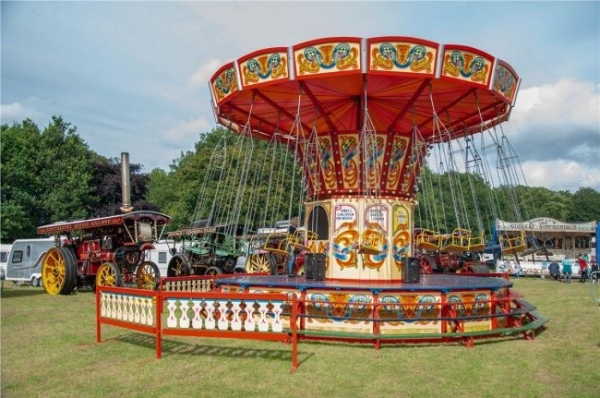
At the weekend just gone we were at the Elvaston Steam Rally. It was our first time without ehu.
The 85 Ah battery lasted about 2 days before the voltage dropped too low for the carver cascade to keep going.
Our usage consisted of: water pump for family washing and pot washing; cascade heater for 2-3 hours/day; phone charger overnight for two nights; fluorescent lamps for maybe 1 hour/day.
Am I getting fair performance? I've no idea how old the battery is.
I also noticed that when the voltage starts to drop, the pump does not generate enough head to activate the pressure switch, so it runs on and leads to more rapid battery drain unless we resort to "water on....water off" communication around the van.
I noticed a few people had solar chargers, do these charge enough to enable use off ehu indefinitely?
A solar panel is a 12 volt charger so doesn't compare with 240 volt electrics that's why some people prefer to use a generator because the appliance does produces 240 volts but at a lower wattage rate than electric hook up. When I go on a rally or a temporary holiday site where there is no electric supply we take a 30 litre camping water carrier with a closing spout and put it outside on a small table merely just to fill the kettle which reduces the use of the water pump therefore thus in turn saving battery power. We then only use water in the caravan via the pump for washing hands or face, cleaning teeth and shaving etc. plus washing up dishes which all saves on battery power for lighting and tv viewing in the evening. I then use a generator for about an hour each day (weather permitting) to replenish the battery and charge any appliances whilst connected such as mobile phones etc. If you have a caravan with a 12 volt flush then this also consumes energy from the battery so you have to be somewhat cautious about saving energy. Basically the more energy you consume the bigger solar panel you need that's why some people opt for a 100 watt panel minimum.
Jesscar, what do you mean cascade heater for 2-3 hours a day, surely this is running on gas? We have rallied for 3 days with no problem but bought a 60 watt solar panel last year. Providing we don't go daft with the use of electric it will keep the battery charged. we went away for 9 days last year and the battery had as much charge when we left as when we arrived. We use the usual stuff i.e. lights, water pump, phone chargers, radio etc.
If you are going rallying regularly it is worth considering a solar panel.
Changing the halogen capsule lamps (10W / 0.77A) to LEDs (1W / 0.077A) will save a lot. Take a spare battery to double your life "off grid". Genny to charge the batteries, be selective about when you run it so not to disturb other campers (not at night or meal times, when the kids are playing noisy games is best) During the evening don't flush the loo, 2 people and a few beers / glasses of wine = a lot of flushes give it a flush before bed and another in the morning (No 2 excepted)
jaqugra - yes it burns gas, but needs 12V to operate the control system and ignition etc. I think the gas valve is probably some kind of solenoid device.
It depends on the size of the battery you have as the more amp hours (ah) the battery is the more energy you store but not sure exactly how many days you can go but hazarding a guess probably three days if you are economical with the 12 volt power. The biggest downfall is if your battery power drops too low it will activate the water pump and will run constantly thus quickly sucking what juice you have left in the battery because the reduced power isn't strong enough to hold the current to the pump. If the battery charge drops too low then you may have difficulty re-charging it. It's happened to me in the past when we started caravanning but the only solution is to re-charge your battery on site by means of 12 volt solar power or 240 volt generator.
Whale submersible pump uses about 3.5A about the same as 4 1/2 halogen lamps. Running the pump for say 5 minutes a day will use the same power as running 1 halogen lamp for about 22 minutes
how old is the battery?? with not TV I can do over 5 days on battery, I do have LEDs, Im guessing your still on the fluorescents, I converted mine with LED strip from ebay.
I can have a couple of showers in that too, although mines a 110AHr battery, but Id expect at least three from an 85.
I wouldnt be surprised at 3 days, we have had longer and shorter periods. A battery loses some capacity with age though.
we have a 50watt solar panel on our van roof now and can manage 2 weeks with no significant voltage drop in the summer.
you could adjust the water pressure switch down a bit to overcome the issue you describe. You could remove the guts from your lights and fit some LEDs in there.
Do you fully charge your battery before departure? The on board charger only charges 80%
I had intended to put the battery on a proper charger before we left, but being slightly disorganised I only got around to it with about an hour to spare, so it only got a small boost.
I never really gave the water pump much thought, although I tend to turn ours off at night and if we go out, in case there was a leak, I don't want to return to find the aqua roll has been pumped across the floor, run dry and burnt the pump out for good measure. I have had to adjust the pressure switch occasionally though.
The LED lights (I converted ours from halogen when we changed the caravan) and the solar panel were a great investment. We have never flattened a battery since, though a 13 watt solar brief case from Maplins and two fluorescent strip lights would cope with a long weekend easily with a little bit of thought. (Eg turning the toilet light off after the kids who think switches only turn on)
However, the 50 watt panel copes well, even if we get power hungry and watch TV all evening, by the following lunch time it has recovered. If you are fairly DIY competent, you can buy the panel and regulator on eBay for half the cost of the kits and make the roof brackets from an off cut of aluminium angle which a metal fabricator would let you have for a few pounds, rather than the cost of a proper bracket. Ours is bolted to the sides of the panel and stuck to the roof with Sikaflex. I also have a plastic moulding, left over from a new bathroom to stop air getting under the front of the panel while travelling which is recommended, though it seems illogical. It cost me £88 in total, though I have since fitted a better regulator which enables me to simultaneously charge two batteries and monitor the batteries and solar panel. It's also much bigger than it needs to be giving me the option of fitting an additional panel in the future. Had I got that originally instead of the cheap regulator it would have cost about £110 all in, and a couple of hours to fit.
Panels have gone up a little bit in price since then, but are still very good value if you compare them against the cost of staying on a site with EHU and a site without, it can pay for itself in a few weeks. I would definately recommend it.
I would suggest one of these, depending on your available roof space as they are different dimensions.
Amazing family weekend with old steam engines, classic car displays, market stalls, and full catering and bar. And camping on site - Save £25 by booking in advance.


 Topic: Expected battery life on rally?